“I started as a shopgirl,” UMENCO head of recruitment Rebel Sorensen tells me. “I’m still a shopgirl, in my head.” Sorensen’s beginnings were relatively linear. She began a nine-year career at Australian luxury boutique, Parlour X, which took her through a slew of roles: designers and operations management and later buyer—straddling responsibilities across Milan and Paris Fashion week.
The roles continued to materialise—but two of the trademarks which stayed with her until today remain just as pertinent in recruitment: honesty and trustworthiness. “If I was on the shop floor, my job is not to push an item on a customer,” she says. “It’s to distill and facilitate the chemistry between the right person, and the right product.”
It was when she returned to work after her first child that she realised she had outgrown her time in retail management. “Motherhood is great, but the support and reality of it often means that when you return after birth, you often come back to a scaled back role,” Sorensen notes. “Where you wanted to be might not be what you have to do.” What struck first was the dissonance she felt, now working in that vein of fashion. Buying and being in showrooms were fantastic experiences, but day to day, she flourished in the general running of a business. An assessment of the general running of a business was exactly what led her to recruitment.

At UMENCO, a market-leading recruitment and headhunting agency which sits across fashion, beauty and lifestyle industries, Sorensen holds the same approach as she did when she was in sales. More tangibly, and perhaps inexorably, however, she has an even simpler motto around how she’s fallen into this career: “I just make friends with people, and I get them jobs.”
Sorensen is clocking into her fifth year at UMENCO. Her niche, or sword, really, is in placing design and development talent—-recruitment by personality and portfolio, as opposed to a more siloed approach. It’s what drew her to the agency after the second lockdown. “I wanted to be in a role where I was operationally at a focal point. When we say operations in recruitment, it’s a slang term for a fixer,” she continues. “It’s someone who understands processes and makes things run. I address problems and predict what problems occur beforehand.”
She’s cultivated a portfolio of vital skills. How to gently push back. How to influence, strategically, especially when decisions of importance are made. How to juggle motherhood, a paramount source of energy and time in her life, while still ensuring that her career is on the rise. “You can’t manage and predict how someone does if you don’t understand them,” Sorensen adds. “A person could look fantastic on paper, you can put them in a matrix and be perfect, but what will stop them from pulling out six weeks before the role begins? Technology doesn’t account for the humanity of what we do.”
"I wanted to be in a role where I was operationally at a focal point. When we say operations in recruitment, its a slang term for a fixer ... It's someone who understands processes and makes things run. I address problems and predict what problems occur beforehand."
~ Rebel Sorensen
It’s also why she eschews the idea that what she does is up for replacement. “I don’t think AI is going to take your jobs,” Sorensen laughs. “If you’re simply a numbers person in recruitment, it might. But UMENCO is all about people and relationships. A lot of our think tank moments are people we have met four or five years ago, and jimmying that together with what the company at hand is looking for. AI will help with day to day workflow, but the idea of recruiting as people first will never be replaced by technology.”
She recalls a role she placed at UMENCO, where the team were in talks with a senior leader in the fashion industry in Australia. She had been offered two jobs with varying levels of pay. To make the decision, Sorensen posed two questions to the interviewee. “I said, ‘Do you want your life back? Do you want to go to the gym? Or, do you want the money?’” From there, a decision was reached, and the candidate was successfully placed within a brand. To pull it off, one needed the level of comfort and respect to identify key drivers. Sorensen might have had no skin in the game, but she had to have a conversation with someone—and more often than not, it’s a sleight of hand. It’s tricky.
"I'm not talking about wages, I'm talking about the investment in company culture ... People need to buy into the vision of that company. We do see a lot of movement in the industry, particularly within fast fashion circles, but having that solid company culture is extremely important to steer us forward. You'll never have the whole picture, but if you have a collaboration, you can manage what can happen from there."
~ Rebel Sorensen
The head of recruitment attributes all of her deftness to her initial experience. She faced clients from every walk of life: CEOs, senior lawyers, mums who came in, anyone who was looking to dress up or down for whatever the occasion called for. “You need to sense-check a whole gamut of different people,” says Sorensen of relationship building. “There were people who had babies, lost babies, who had partners who died, people who were financially struggling, it’s about connecting people to people. There’s always something that someone cannot share—and that discernment is really important. The trust that I could deliver was what drove my work.”
At UMENCO, the head of recruitment anchors the skills she’s gleaned to the diversity of the business. Every client requires something entirely different. Some chat with the recruitment team for 45 minutes, others provide positive feedback across the board but are unable to come to a decision. One day, they have to match the rigour and precision of product developers and garment technicians, while on other occasions, they’re placing wholesale managers who are keen to have a yarn and to build out a relationship.
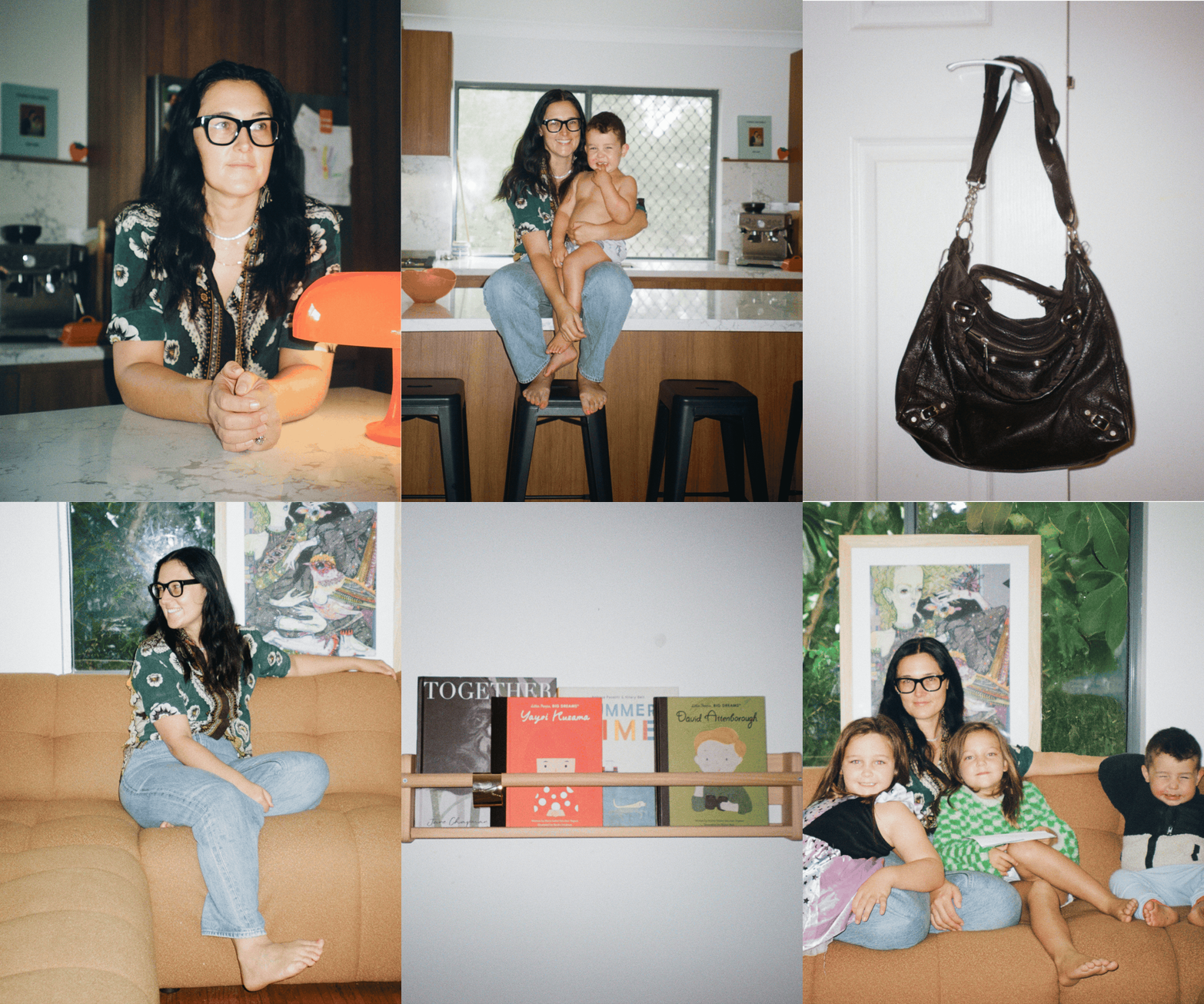
While technological impasses aren’t as imminent for headhunting, the world of recruitment cannot survive without what Sorensen believes as equitable investment. “I’m not talking about wages, I’m talking about the investment in company culture,” she says. “People need to buy into the vision of that company. We do see a lot of movement in the industry, particularly within fast fashion circles, but having that solid company culture is extremely important to steer us forward. You’ll never have the whole picture, but if you have a collaboration, you can manage what can happen from there.”
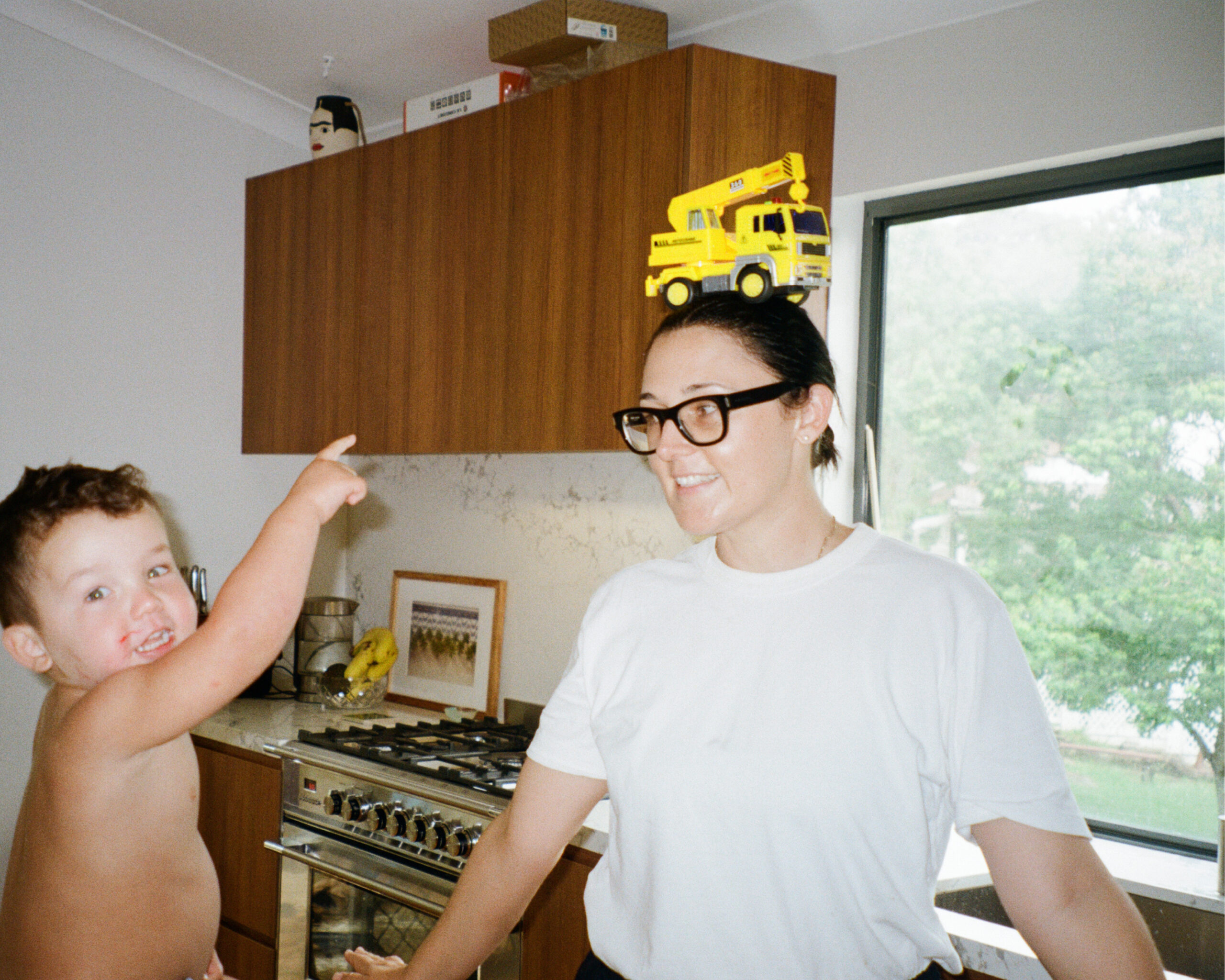
When looking at the arc she’s had, Sorensen prides herself on the relationships she’s forged. She prides herself on being able to do the work, as a mum of three young kids. She works part time, but she, according to art director Maya Pratt, is one of the top performers “who are bringing in the bacon”.
For those looking to follow Sorensen’s professional lead, the notes are encompassing but brief. “Do the work. Do the best job you can, but make it work around family life. Communicate really clearly, and that’s a rule. Be good in times of crisis—if no one’s dead, no one’s dying, and that’s all you need to know to continue.”
Profile by Karen Leong
Photography by Maya Pratt