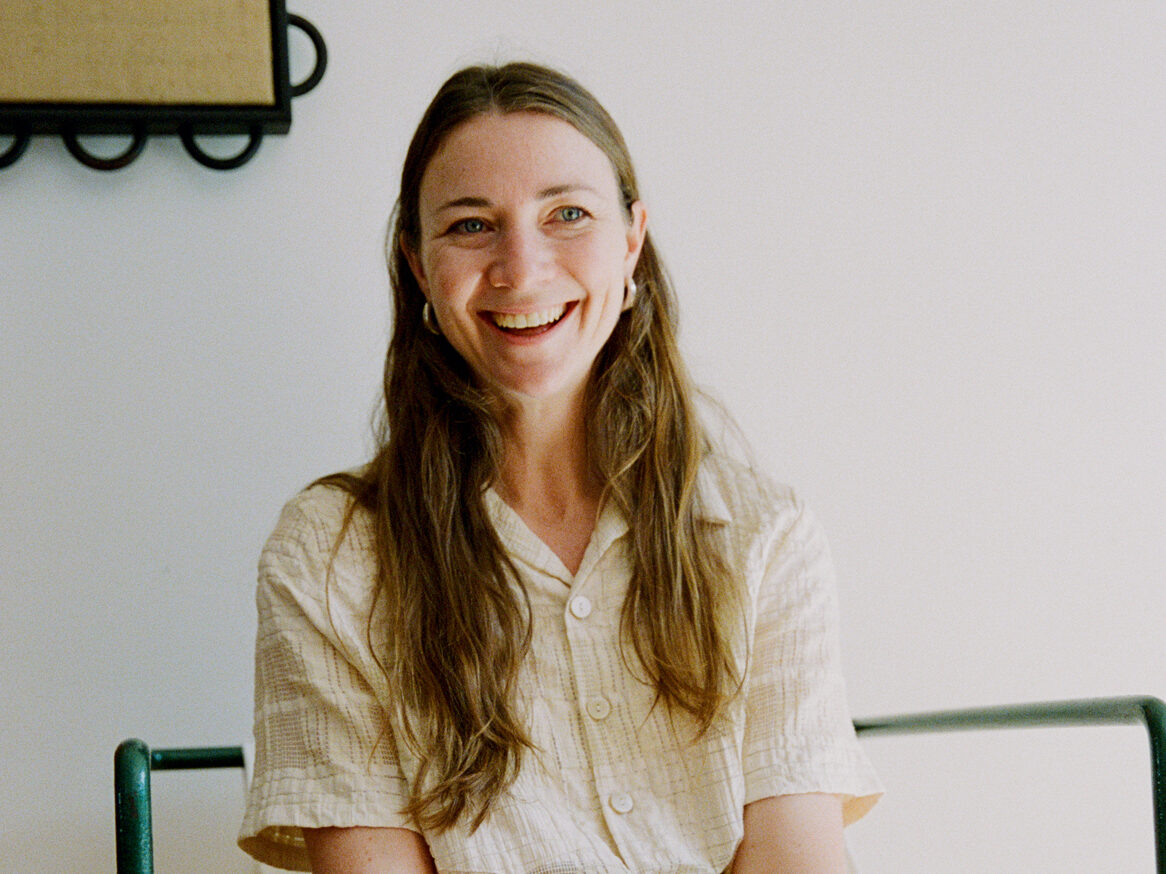
Amy Low came into fashion as a retail assistant. She sold formal dresses at The Strand, assisting women with their purchases of evening and bridal wear. When the time came to ‘get serious’, she abandoned her post and cut her teeth as a lawyer. A feasible career in fashion seemed incongruent. And to many, it was. Fashion, with its foothills and advancement asymmetries, seemed like an impossible mountain to scale.


Then, she came across The Social Outfit. Founded in 2014, the registered charity proved Low wrong about a record number of things. First: the label was founded with a purpose. Targeting refugee women and empowering them with a profession, the work-integration social enterprise delivers sustainable clothing collections, celebrating the creativity, strength, and learned skills of migrant seamstresses. The clothing collections are entirely sourced from remnant deadstock, repurposed into each new line. To train the women, employment programs upskill and focus on sewing and textile craftsmanship, building on existing or newfound skills in a supportive environment. Professionally, it empowers migrant women with income and champions diverse and underrepresented communities in greater Australia.
"Fashion is a touch game... There have been turbulent times, times when I've been misplaced, in my career as well as due to the global forces beyond us, and working through that from a leadership position is really hard."
~ Amy Low
Since Low has been beholden to this, she became a board member in 2015, serving as Vice Chair since 2020. Prior, she held a post as Global Marketing Director at Futurity Brands, boosting growth and exposure for Australian surfing label, Piping Hot Brand. When we speak in May, she has just been newly appointed as CEO of the very label that brought her back in communion with what she loved first about fashion. Value-driven leadership is the backbone of her ethos. Over the years, she’s observed the leadership of founder Jackie Ruddock, and Chair David Hardie at The Social Outfit, which spurred her own growing interest in the brand and its mission of circular purpose. “At the end of the day, what we do is driven by giving back to our community, and by doing so, we’ve made a difference—and our mark, setting us apart from those in this overcrowded industry.” Low says.
She’s right—The Social Outfit boasts a social reach of 31,000 followers on Instagram. They have a growing audience of 9,900 on Facebook too. During Refugee Week, workers Fatima, Soheyla, Marina, Han and Francia stepped up to share their words with the world at Admiralty House on Nine News. Their wares are stocked on conglomerate national sites like The Iconic, and interest for the collections only seems to grow. As CEO, Amy oversees the top to toe chain of command: commercial growth, ethical manufacturing, retail and online presence, and running social impact programs. She will coordinate efforts with the existing team, the label’s longstanding partners and affiliates, as well as the larger community, generating strategy across the board and continuing positive change—from worker to buyer.
“At the end of the day, I think about the reaction that one of the migrant workers has, when they see the end product of their craft, and see it modelled on customers, and worn as a treasured item... That sense of empowerment that my work can offer is exactly why I do what I do."
~ Amy Low
It’s only now that Low feels truly aligned with the mission statement—not only of her company, but her life. “Fashion is a tough game,” she adds. “There have been turbulent times, times when I’ve been misplaced, in my career as well as due to the global forces beyond us, and working through that from a leadership position is really hard.” Believing in the totality of your work, according to Low, might be the only way. She credits the long game as invaluable to how we learn and maneuver, but also opens herself to opportunities and challenges. Learn gracefully by asking reams of questions. Pry your mind open, outside the fashion sector. It’s not enough to excel in the arena you’re used to, but rather, cross-examining everything with a developed lens, outside of your drivers of interest. “At the end of the day, I think about the reaction that one of the migrant workers has, when they see the end product of their craft, and see it modelled on customers, and worn, as a treasured item,” adds Low. “That sense of empowerment that my work can offer is exactly why I do what I do.”

Profile by Karen Leong
Photography by Maya Pratt