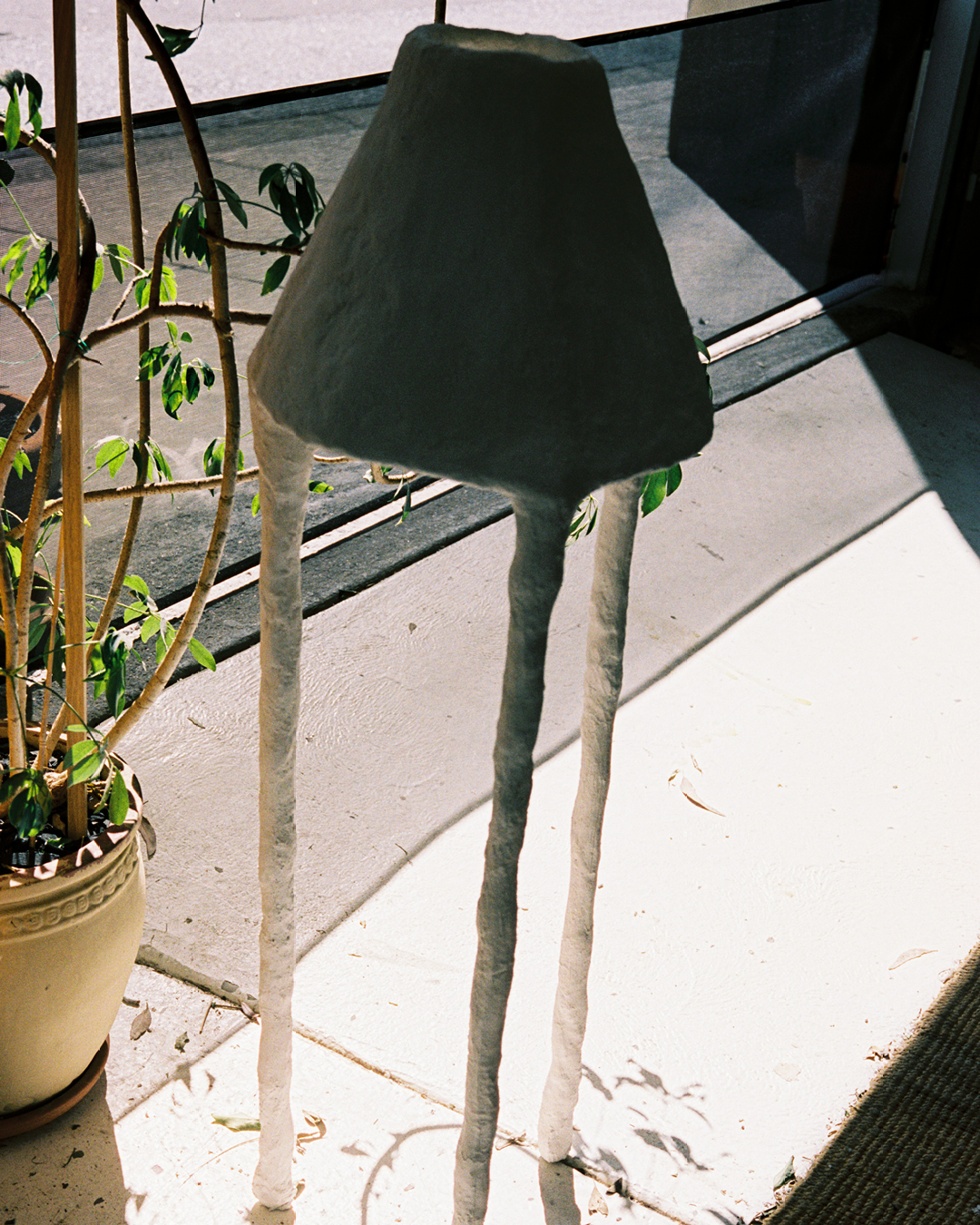
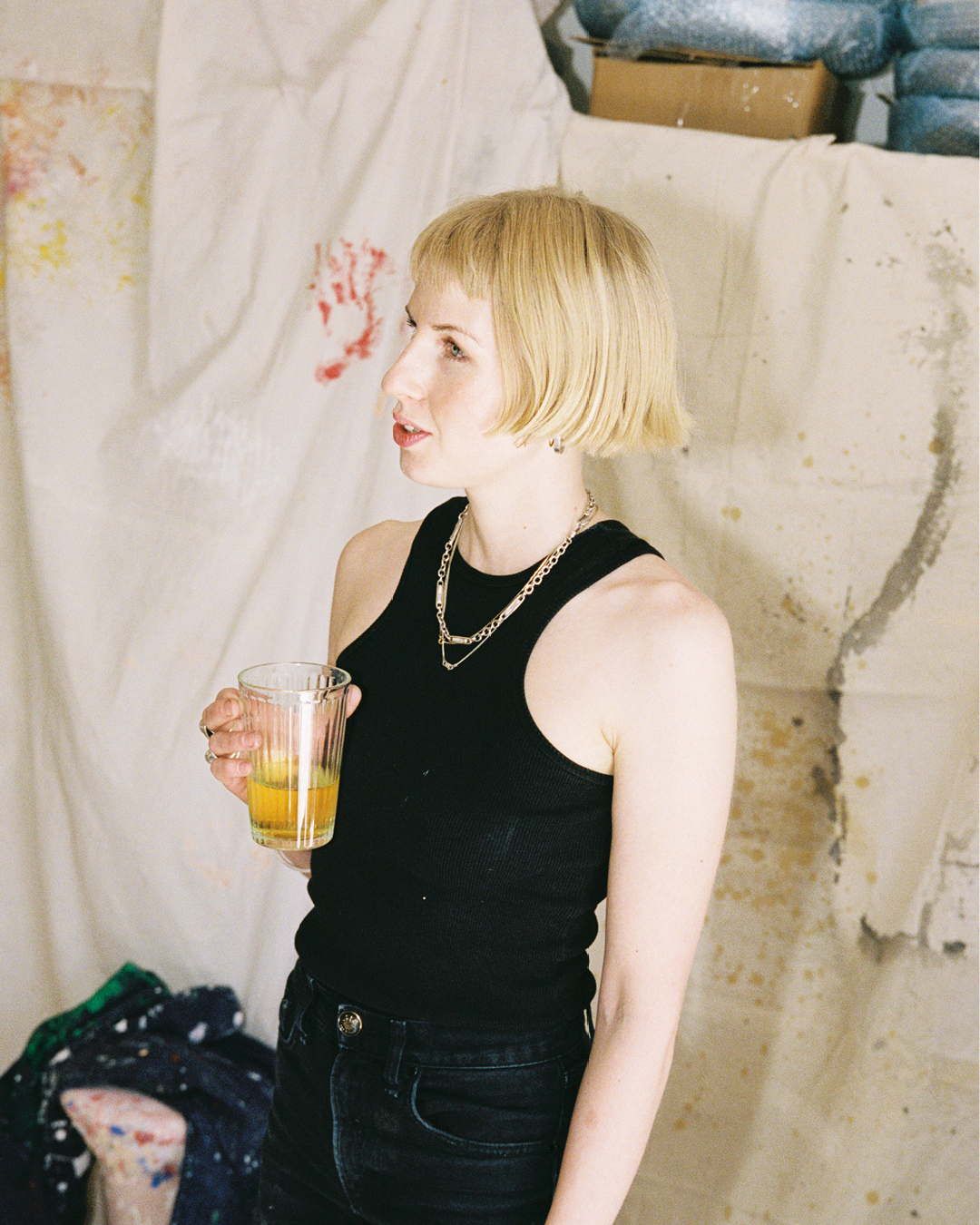
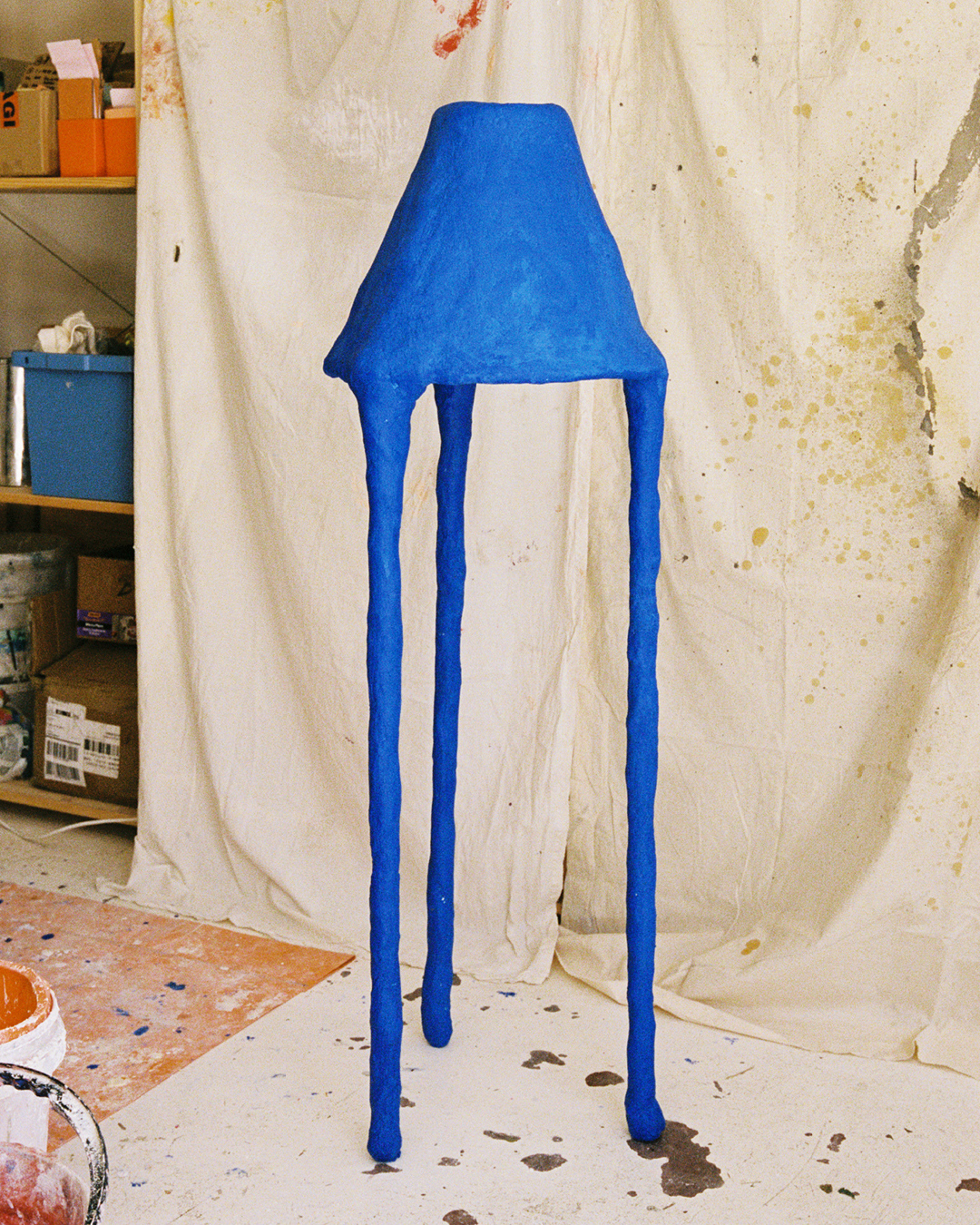
Designer-artist Jordan Fleming calls me from her shared studio in Northcote. She shares the space with three others, a tight crew of lighting and furniture designers and people involved in film. Everyone has their own little area, and there’s a small crescent of the studio which operates as a workshop which is, according to Fleming, free-for-all. It’s where she houses her creations — goblet coloured lamps that look as if they are stretched by putty, cast by hand in pigment — some of which prop up mirrors. “I love being in a studio with other people,” says Fleming. “When you’re alone in the design world a lot, you need to show your ideas to others. Cross-pollination is so important.”
She recently exhibited a show with architect Rosanna Ceravolo at Oigall Projects. Their debut collection recast the architectural cornice as something more yielding. The title of the show, ‘Soft Monuments’, speaks to this. Pliable, moving pieces become a source of illumination. Materials guide each work, turning light and metal over in new and unfamiliar ways. All the sconces radiate a soft spectre of light.
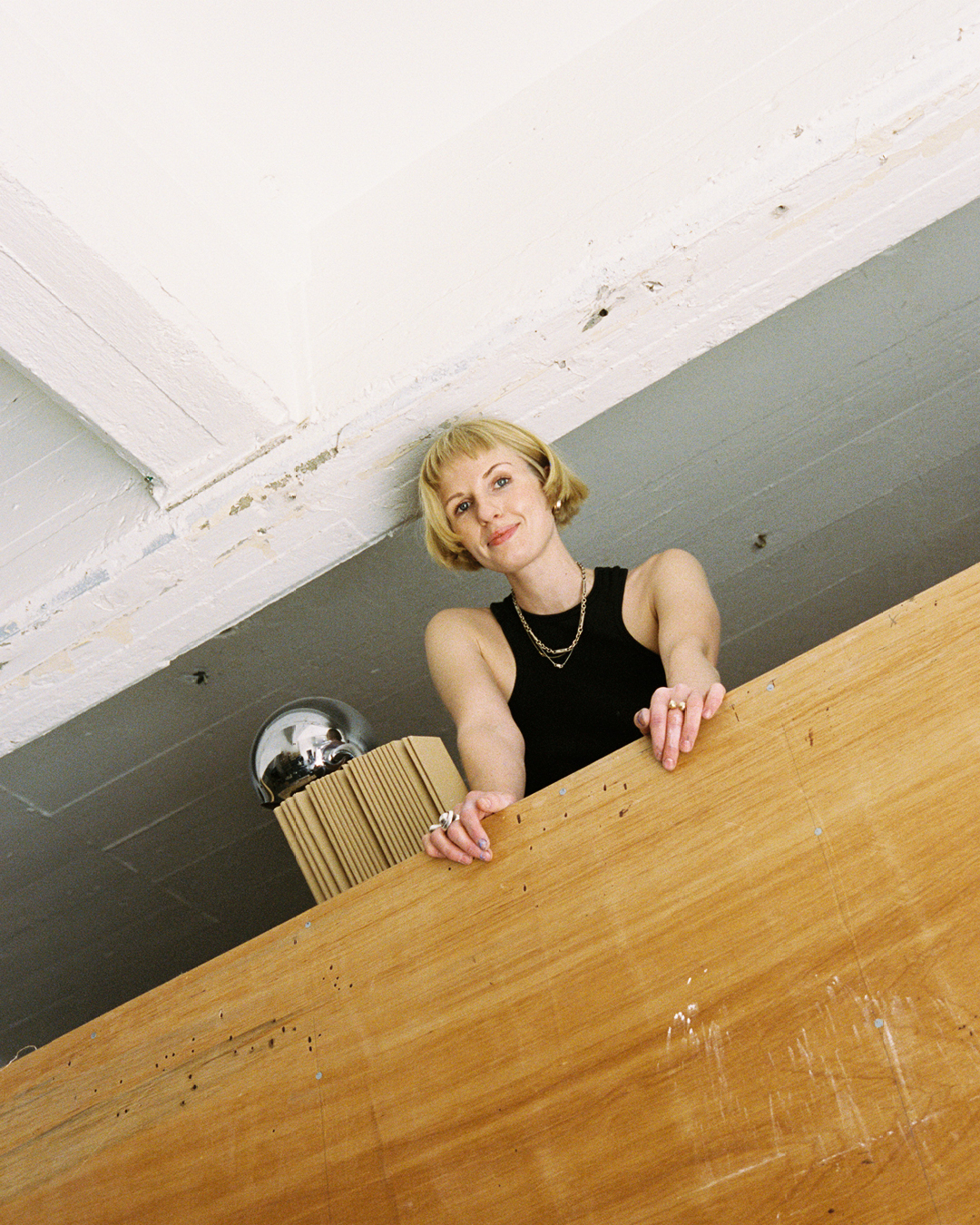
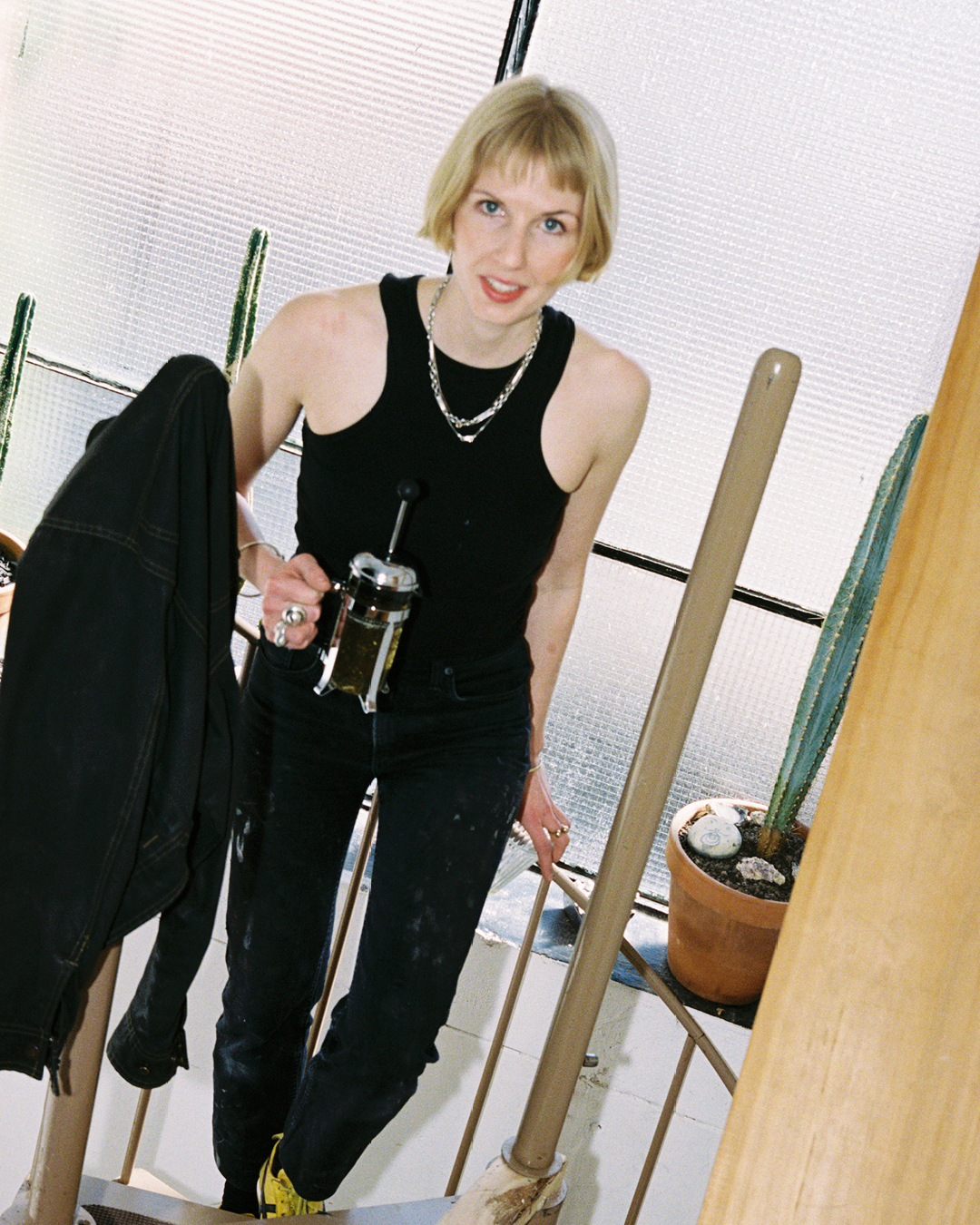
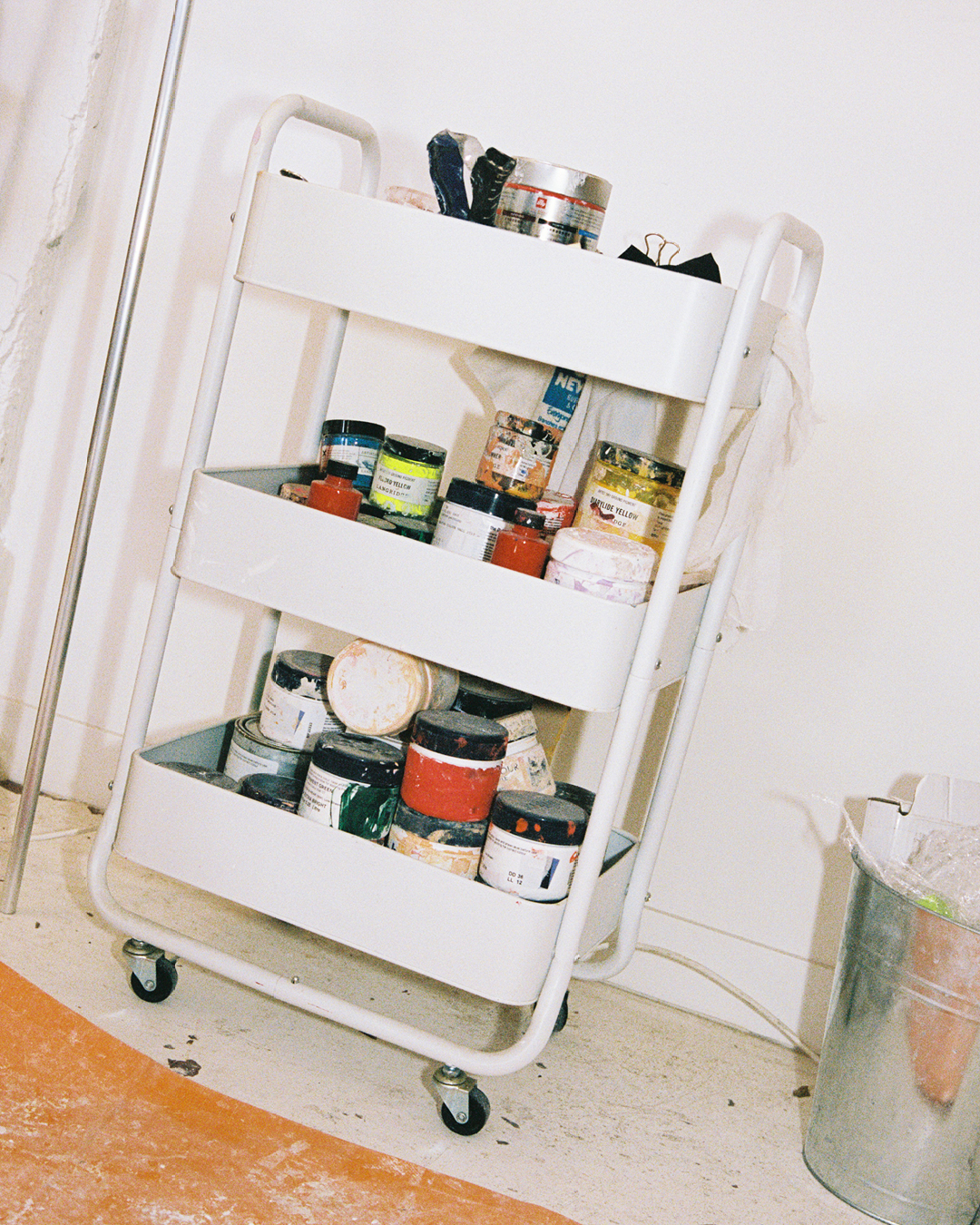
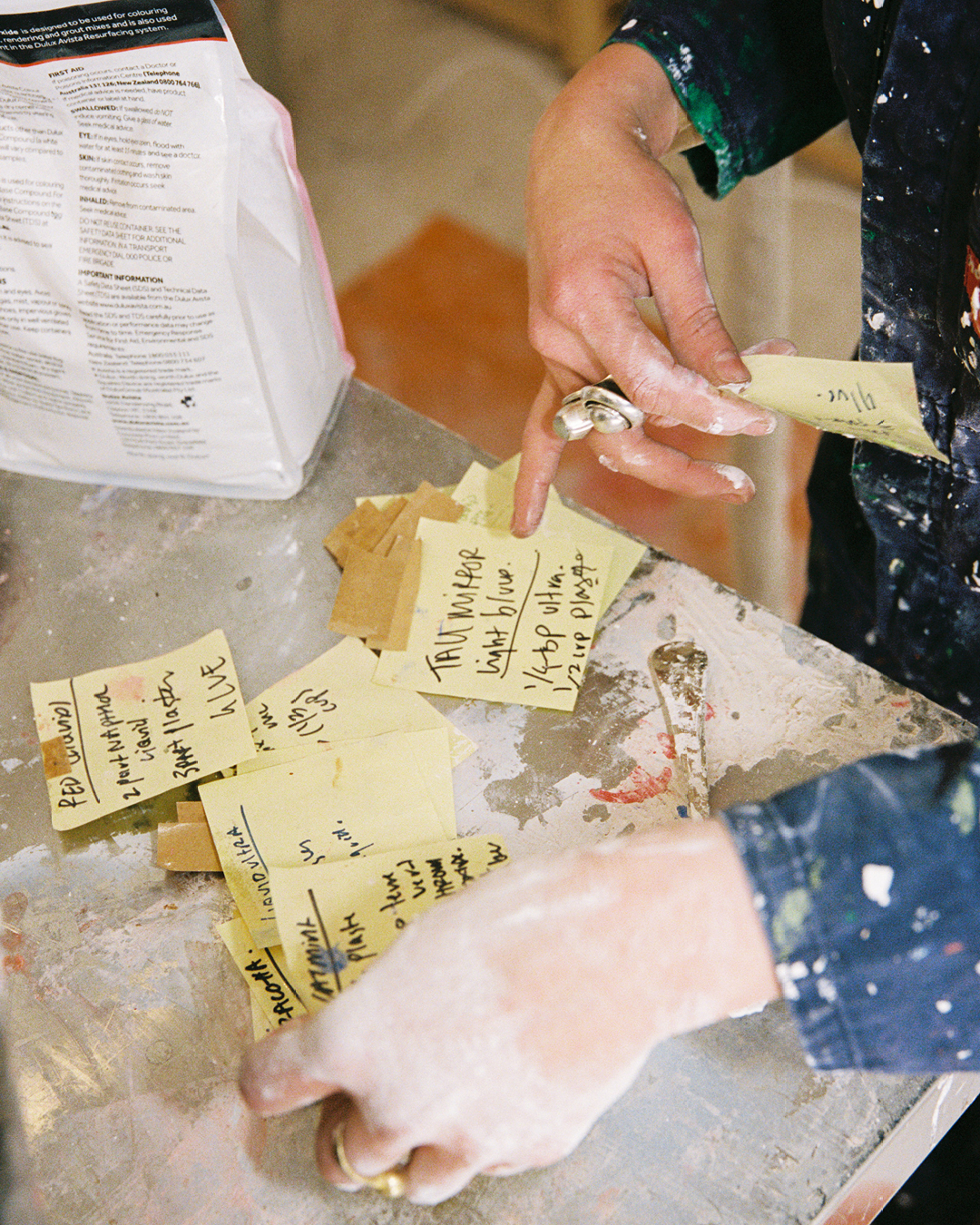
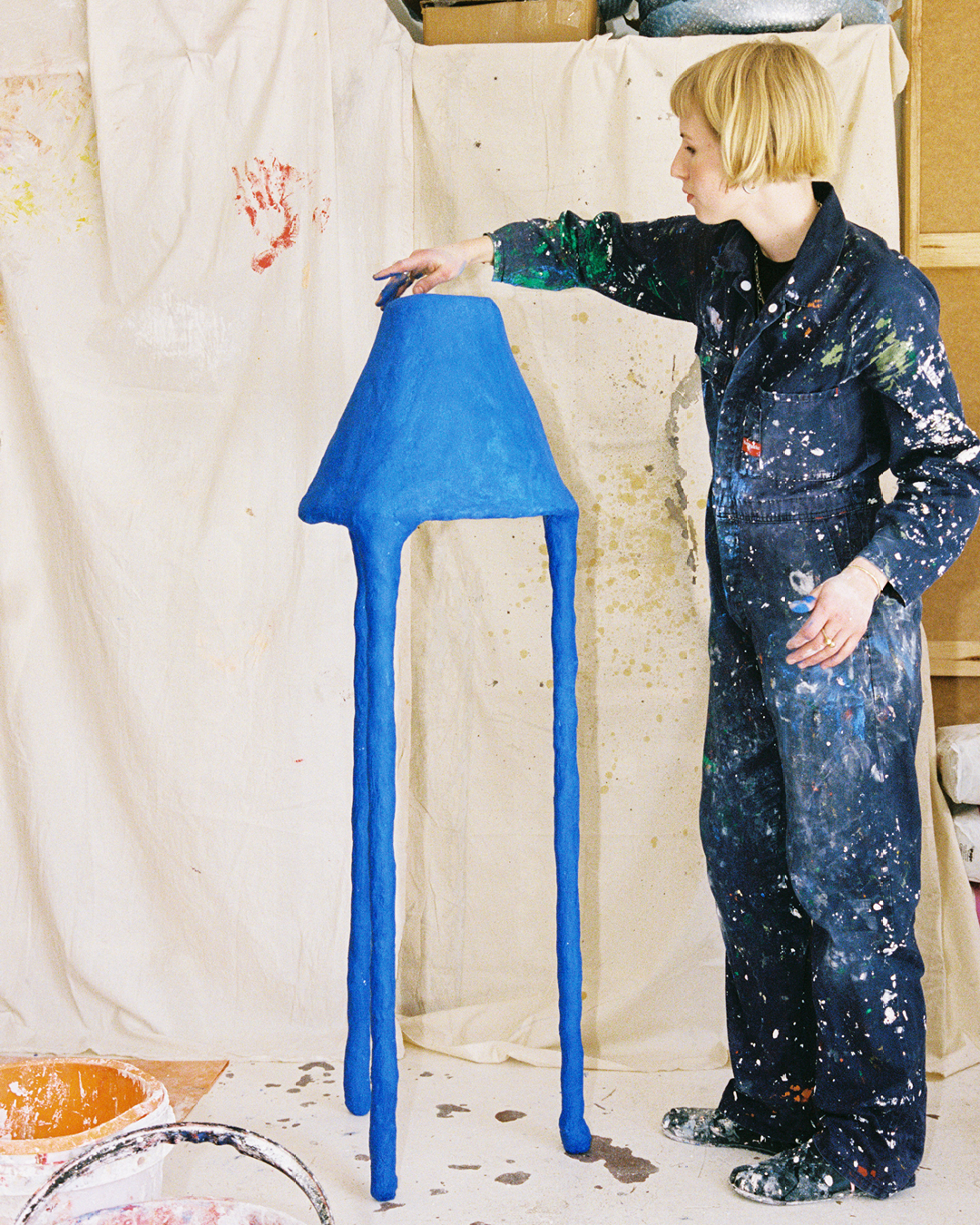
There’s a tinge of madness to Fleming’s process. “I always looked for odd opportunities. I knew I wanted to create, and I’ve always made things,” she notes. “You really have to be a jack of all trades. You have to have a work ethic, to be able to fully approach and appreciate what you do.” Fleming started working in film and television in the art department, on stand-by with props or as a set dresser. The designer went abroad for a spell of time, and then commenced studying objects at the University of New South Wales. Tools came next. “I think it’s a really important base in the beginning, when you’re just getting around prototyping and creating,” she adds. “I was getting a feel of what materials could be used to change and impact shapes.” When I enquire about what might actually be inside the toolbox, she rambles off a list: drills, impact drivers, jigsaws and orbital sanders — nothing was too unwieldy. This dexterity served her well. After her degree concluded, she dove into cabinet-making in Melbourne, and quickly realised that the business of cabinetry was one that might not be a suited long-term fit.
She rented studio spaces. She painted. She scoured for odd-jobs and bits and bobs. Fleming started working as an interior designer at twenty-four (“I declared I was not a child anymore!”) at the architectural firm Alexander & CO. None of it was really planned. In fact, it was quite the opposite for the designer, who, in her words, “haphazardly fell” into the world she now occupies. “I’ve always wanted to approach things from a sculptural artistic lens, and I remember entering the Melbourne design fair and noticing there was a community and people who do this full time,” she recalls. “It made me believe that this was an avenue I could really push.”
"When you are alone in the design world a lot, you need to show your ideas to others. Cross-pollination is so important."
~ Jordan Fleming
Today, the thirty-two year old artist is still uncertain of where this creative force stems from, only that it has persistently guided her to the interplay of materials, and the dialogues and relationships that might arise when different factors enmesh. This instinct was whittled into a visual language, one which became a driver behind how Fleming plays with object and space. “I became aware of the things existing in the world,” she says of her artistic point of view. “I’m drawn to things with off-kilter scale or proportions, whether it’s a drawing, a fence, or a piece of furniture.”
At her base, a day at the studio might shapeshift, depending on what needs to be prioritised first. She tries to stick to a rubric by writing a long list and by not leaving the studio unless necessary. “When you run your own small studio, being your own boss is hard. There’s a lot going on,” Fleming laughs. “Today could be computer day. Tomorrow might be sanding metal day.”
When she’s uncertain or in need of a boost, she talks to the designers she knows — some of them meters away. She hails from a robust community in Melbourne, and when the conversation turns to the Australian creative landscape, Fleming is effusive. According to her, there is a richness in that artistic circle and a generosity which extends to everyone in her field — and beyond. Last year, she designed two new collections for Australian furniture and lighting brands. She is keen for further opportunities that are meaningful and considered, and to collaborate in alignment with her ethos. Working this way has become her north star, and the designer does not plan on slowing.
“Last year was a big year for putting pieces out in the world, and this year is for observing how they work in the market and with people, and building on that body of work,” Fleming shares. “I probably need to refine and streamline my process, as opposed to getting stuck in my ways. I’ve got to get more clever with time.”
"Build slowly. Be really clear about what you're offering. Your intention should be focused. The world has too much stuff in it. What is your offering? What are you putting into the world? The message you want to share - that's what you should think of. Be responsible for why you are creating."
~ Jordan Fleming
More process-building behind products seems to be king in 2026. In a couple weeks from the time of our conversation, she will kick off Melbourne Art Fair with a booth in the Design section. Then, Fleming will head overseas for a research fellowship carried out through the Institute of Specialised Skills, where she will research the process of vitreous enamel. “It’s melting glass powder, traditionally what you find in jewellery and Le Creuset pots,” Fleming explains. “I can’t wait to write a giant paper about it.” Part of her practice abroad will include flitting across greater Europe and connecting with key artisans from Italy to Belgium, with half-baked plans to catch Milan Design Week at the very end. For someone who blithely works in reverse when it comes to her instinct, Fleming has figured out the mobility her craft and path so far has offered her.
Finally, when I ask about foundational advice to pass to debuting designers, Fleming has to find her words. “Build slowly. Be really clear about what you’re offering. Your intention should be focused. The world has too much stuff in it. What is your offering? What are you putting into the world? The message you want to share—that’s what you should think of. Be responsible for why you are creating.”
Profile by Karen Leong
Photography by Robyn Daly