Annalisa Ferraris is not big on calling herself an artist. How can she, when her oeuvre has ballooned so much beyond what it used to be when she started? “It’s all so much more than painting now,” she tells me. “In the beginning, I would only call myself an artist if I was in the studio painting, but you get restricted with titles and thinking of what you can do, when being an artist is so much bigger and broader than having a fine arts degree. It’s a way of thinking.”
To Ferraris, the cross-pollination between disciplines happens whether you want it to or not. “We’ve been told for so long you should do one thing, how boring,” she says, a brisk glibness in her tone. “We’re all going to die, we may as well get in as much as we can. Don’t be afraid to try different things. Most people are worried about themselves, so really, do anything.”
Ferraris grew up within a strong Italian family: she has a Sicilian father and her mother’s family hails from the northernmost tip of Italy. The creative learned how to make ravioli at the age of 3. Ferraris obtained an education from the National Art School for painting. Visual arts occupied a large swath of her early career. Her discipline involves minimalist artworks punctuated with pricks and lines, bold brush strokes, and now, primarily, culinary art.
Food came into her orbit out of pure chance. Dinner parties were hosted on the side, traction grew, and then brands started to take note. Ferraris recently created a dinner for a client at RIISE in Paddington, which hosts labels such as Matin and Courtney Zheng which features a climate-focused ethos. For supper, she devised an entirely vegetarian menu with moss-thatched menus and a geranium centrepiece, from which mushrooms poked through. For Trudon, she dreamed up a dinner in the vineyards of Hunter Valley with four courses, candles, and a slim budget. Ferraris and her team picked grass around the vineyard and crowned every table with the stalks. Harris Tapper, the slick, mod-minimalist Sydney label requested a menu with everything in black, and the artist cooked with charcoal to fulfil their requests. “I even have a breakfast one coming up,” she says. “I’m thinking of doing a really long pastry down the table.”
When it comes to inspiration, Ferraris has a veritable trove of it. History is a good context, she claims. Food research in particular strikes her the most — you can still learn about the evolution of a cocktail, the provenance of a sandwich from Sicily, anywhere and everywhere, there’s a rite of practice that’s likely been passed down. Then, things take a fantastical lean.
She warms to playful, make-believe worlds. The bulbous claws of crawfish and stuffed crabs of The Little Mermaid, tables replete with tureens of wine and pastries. She recalls a fixation with the dinner party in Beauty and the Beast — Lumiere and the Beast dancing, the high flutes of champagne and the dancing vortex of candelabras still blows her mind to this day.
"In the beginning, I would call myself an artist if I was in the studio painting, but you get restricted with titles and thinking of what you can do, when being an artist is so much bigger and broader than having a fine arts degree. It's a way of thinking."
~ Annalisa Ferraris
She situates her body of work as “psychotically somewhere between history and imagination”. Playful, make believe worlds. Alice in Wonderland and real-life architecture too, the shapes of buildings, nature, it’s all rife with creativity. “If you’re excited about what you do, it’s really your environment.”
The dinners she hosts always vary so much in scale. Ferraris balances a rotating amount of hosted fêtes, dinners, and catered events, up to five in a month. There will be the culinary brand activations, like the ones she devises for Senne, which are consistently seeded into her yearly calendar, and then extravagant, all-out celebrations hosted at her house. Last year, one soiree involved a harpist and a cocktail bar. But she likes the sprinkling of both: small wins and big swings.
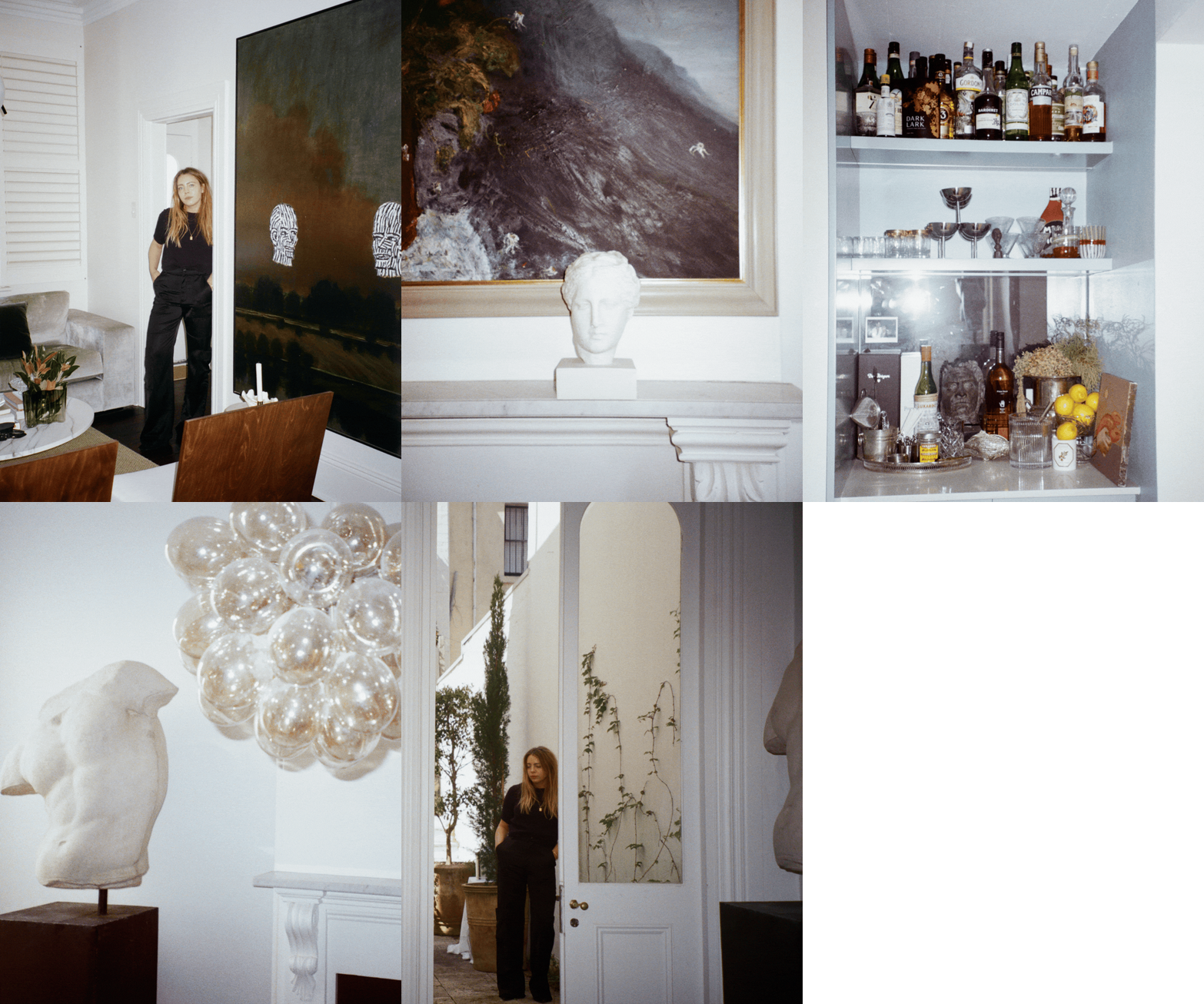
It’s the physical space of her home which presides over most of her operations. When Ferraris moved into the 1880s Paddington terrace she shares with her partner in 2023, she always intended to open its doors. “I wanted to bring the community together,” Ferraris continues. “A home puts people more at ease, compared to a stark room filled with everyone dressed up. It loses its stiffness, and everyone can relax a bit.” The artist recalls a home she entered in New York. Every item, from the bars of soap to the butter knives to the chaise lounges could be purchased. Every aspect was considered, intentional, and purposefully contributed to a singular vision on show.
"Over time, the excitement and the work I was delivering to my community felt more like a studio... It was important to me to keep pushing outside of my physical boundaries, as opposed to keep working in the studio on my paintings exclusively."
~ Annalisa Ferraris
Today, Casa Ferraris might have been modelled on the same ethos. The physical renovation itself wasn’t dramatic. “If you can live in the house beforehand, the house can tell you what you need to do before you go in and gut it,” adds Ferraris. She learnt from living there that herself, her partner and her french bulldog Peanut only occupy a tiny little nook of the kitchen and the garden. The front of the house, where the formal dining and living spaces were situated, were freed up. “That informed the space and what we needed to do, in order to update it.” Interest was drummed up with publications like Elle which featured the house and her practice—and how the two intersect.
“Over time, the excitement and the work I was delivering to my community felt more like a studio,” the artist notes. “It was important to me to keep pushing outside of my physical boundaries, as opposed to keep working in the studio on my paintings exclusively.”
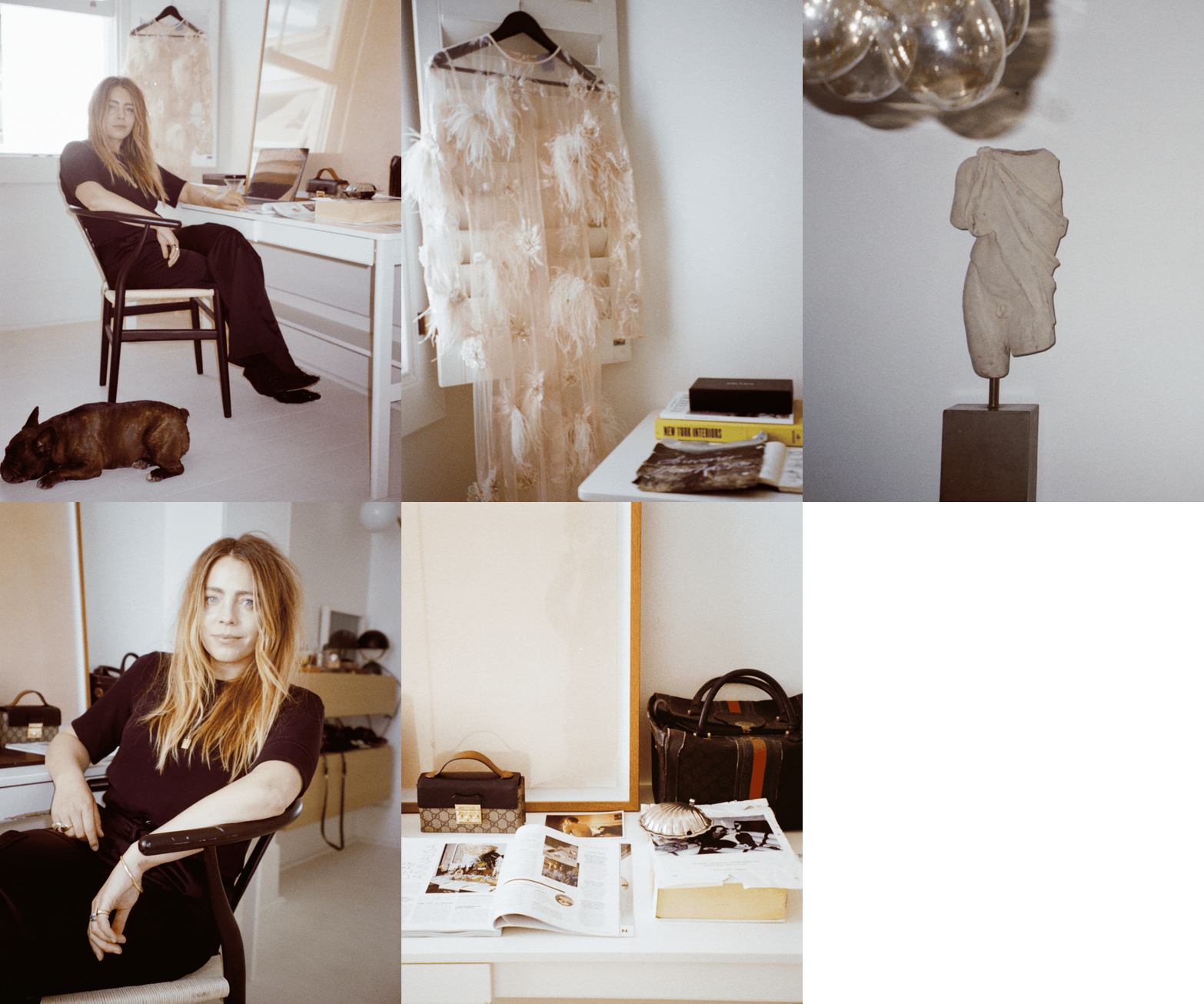
Cue the dinners, and Casa Ferraris’ doors were flung wide. When I ask if Peanut is around for the harpists, the flow of conversation and wine and all the courses, Ferraris laughs. “She’s not the best behaved when it comes to her turf,” she says of her more desultory housemate. “When it’s fairly intimate and people know her, she’ll have free reign. When it’s a big job, she will be at my parent’s house.”
Ferraris has a strong vision lined up for the year ahead. She’s forecasted more events and more food. There will be more conceptual, lived ways of bringing people together. “When the world is as bleak as it is at this time, you crave coming together with strangers,” Ferraris offers. “You need a common bond to make the bleak more bearable. That’s what I am trying to do.”
Profile by Karen Leong
Photography by Maya Pratt