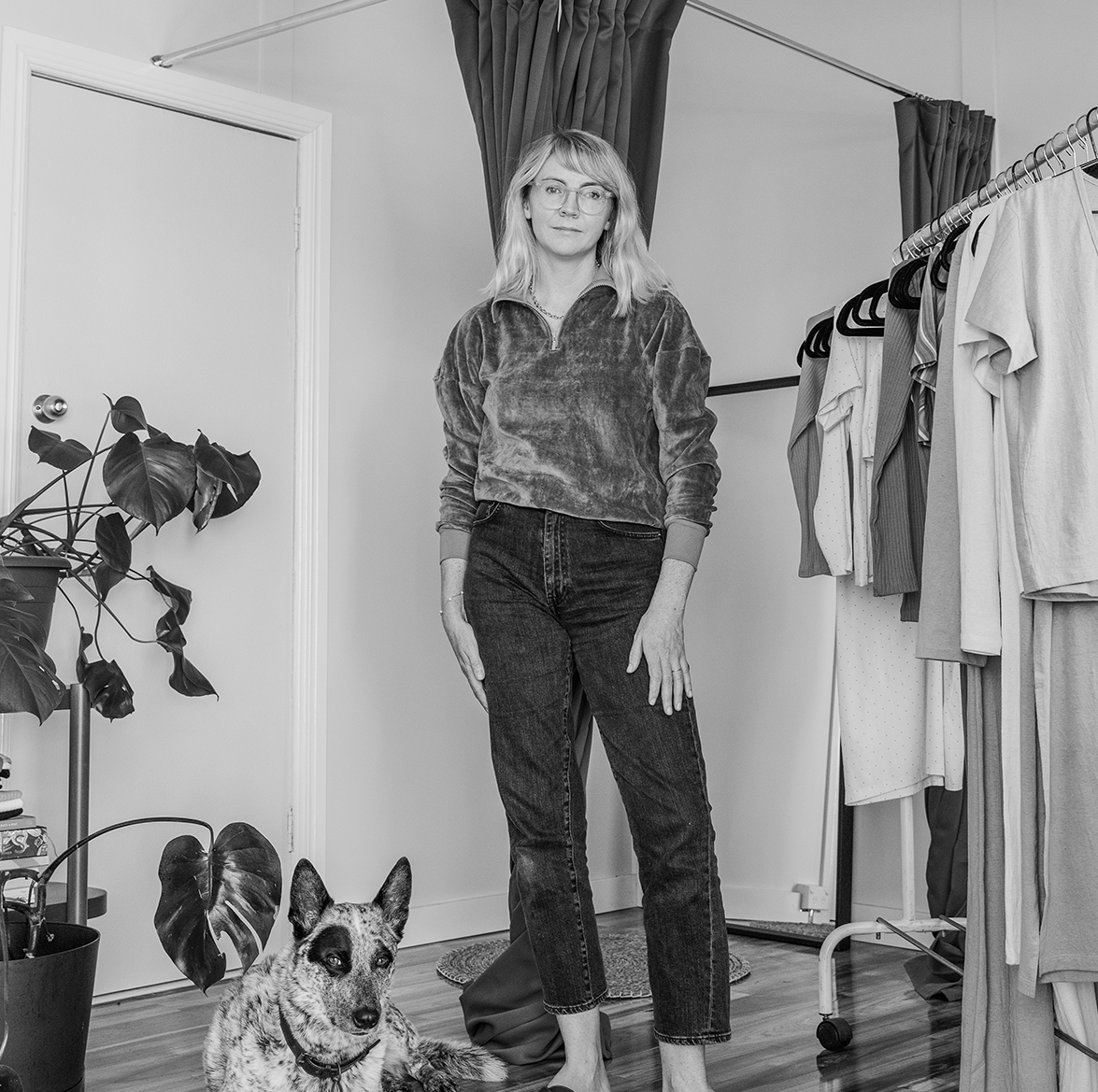
The word authenticity announces itself with an almost amusing recurrence during my conversation with Lis Harvey. It’s a persistent lingual unavoidability that each of us knowingly surrender to again and again. We quietly acknowledge its overuse in modern discourse. It’s buzzword status. But still, it proves restrictive to find a more fitting descriptor for so much of who Harvey is and what she does.
It would be easy, reductive even, to introduce Harvey as a founder, designer or business-owner. Although she is all of these things, she is perhaps better described as the multi-disciplinary forewoman of a resistance against the impractical bindings of conventional underwear. “There was a moment—I was literally walking past an underwear store—and I was like ‘yes, that’s it, that’s what I’ll do!’ That was the idea that just felt right. So I did it,” she says, with the kind of matter-of-fact, single-mindedness that has guided her brand NICO.
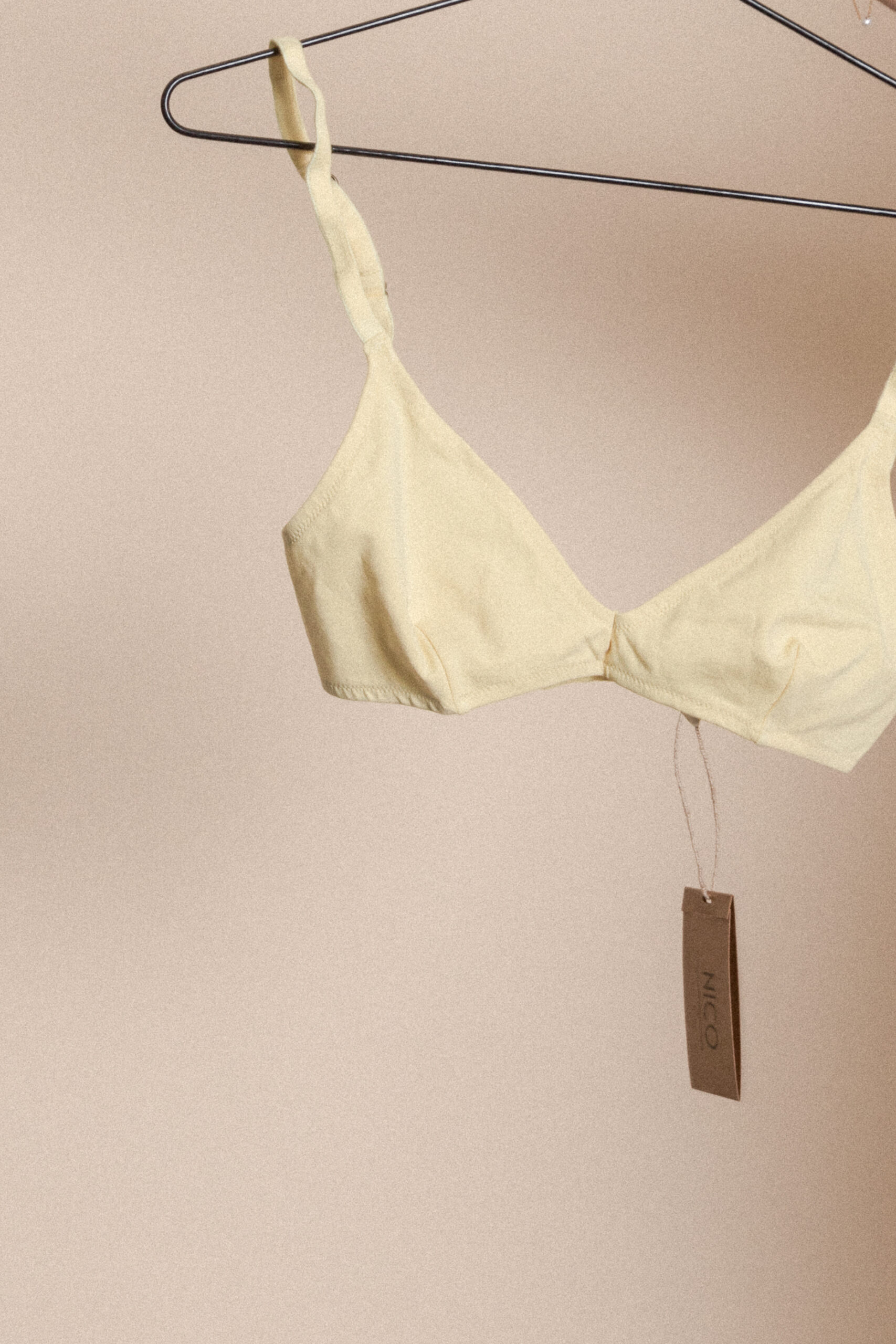
Born from instinct, disaffection and creative restlessness, NICO has steadily become a salient force in Australian fashion. Since its inception in 2012, Harvey has had patent, no-nonsense guiding principles for NICO—these being to unite form and function in beautiful, practical undergarments and basics. “The focus really was on making nice undies,” she asserts. “That was all I was thinking about.”
“NICO came from a very instinctual place...I’m so involved with our community and embedded in the ideas of what we’re doing as a brand."
Lis Harvey
“NICO came from a very instinctual place...I’m so involved with our community and embedded in the ideas of what we’re doing as a brand."
Lis Harvey
Harvey forged forward knowingly, at an opportune moment where paradigms were shifting and whispers about comfort, inclusivity and new definitions of self were converging. A chance to expose the disconnect between the body and its closest, most kindred point of material contact emerged, and Harvey responded by reimagining how underwear could better serve those who had endured the pinching and prodding of lace, padding and underwires for too long.
“In the beginning it would be me and my friends. I would sit with them and we would chat about what we liked. [NICO] came from that. Knowing what we liked, and knowing what we didn’t like as well, which was that hyper-sexualised, male-gaze kind of lingerie brand. At the time there wasn’t too much else around, but we knew that that didn’t feel right. It came from a very instinctual place. We knew what we didn’t connect with as young women. As we’ve grown it’s been kind of the way it works. I’m so involved with our community and embedded in the ideas of what we’re doing as a brand.”
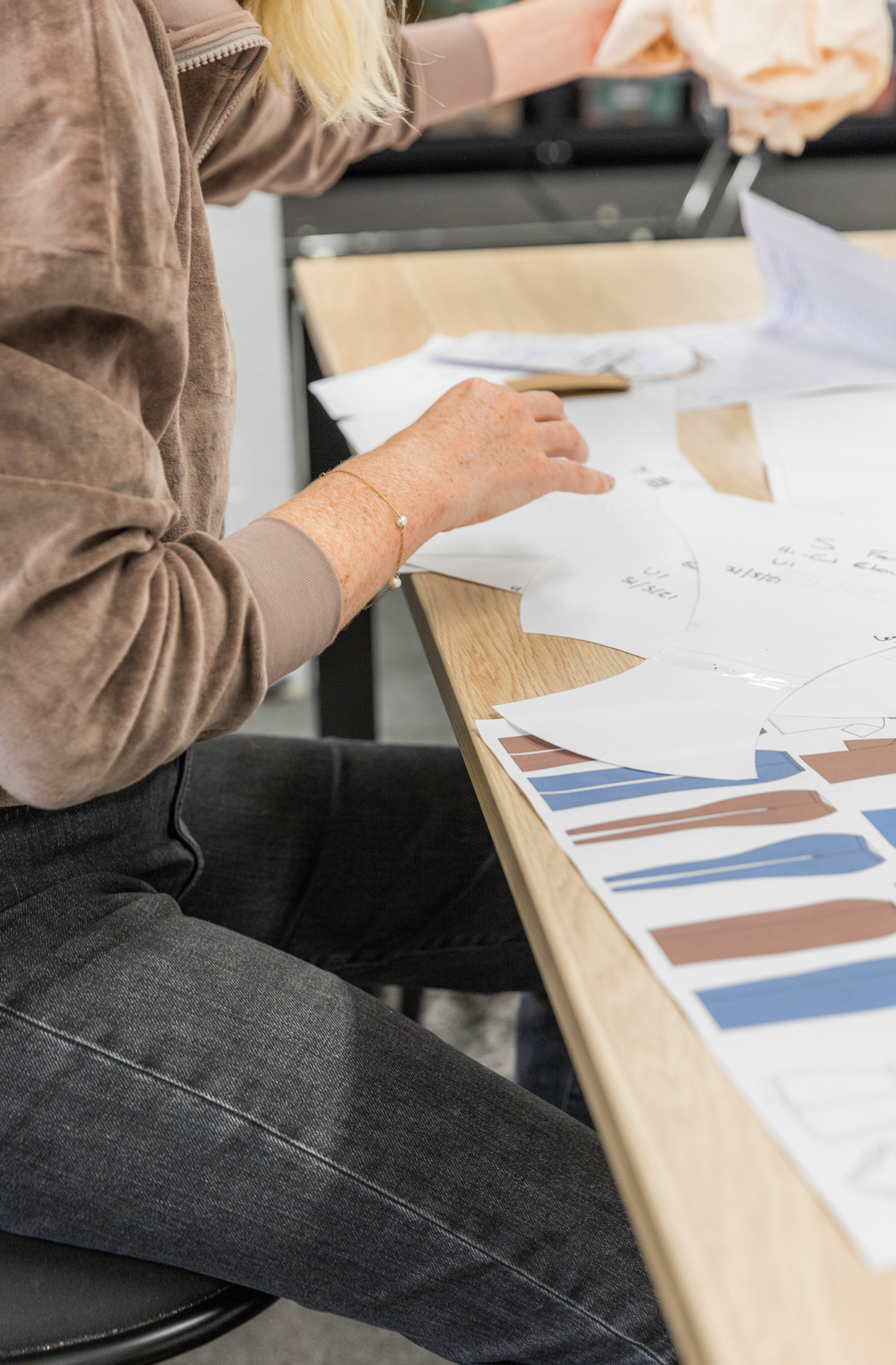
As our discussion unfolds, Harvey feels the weight of each question and responds from a place where her thoughts have gathered one-on-top of the other. Her honesty, resolve and thoughtfulness permeate everything she does, but are best embodied by NICO, to which Harvey extends a consideration that tethers her design process, manufacturing choices and business operations back to a perfunctory care for everyone and everything.
“I probably work too much, and I think I should get a hobby or something,” she admits, “but this is what I love doing. This is it.”
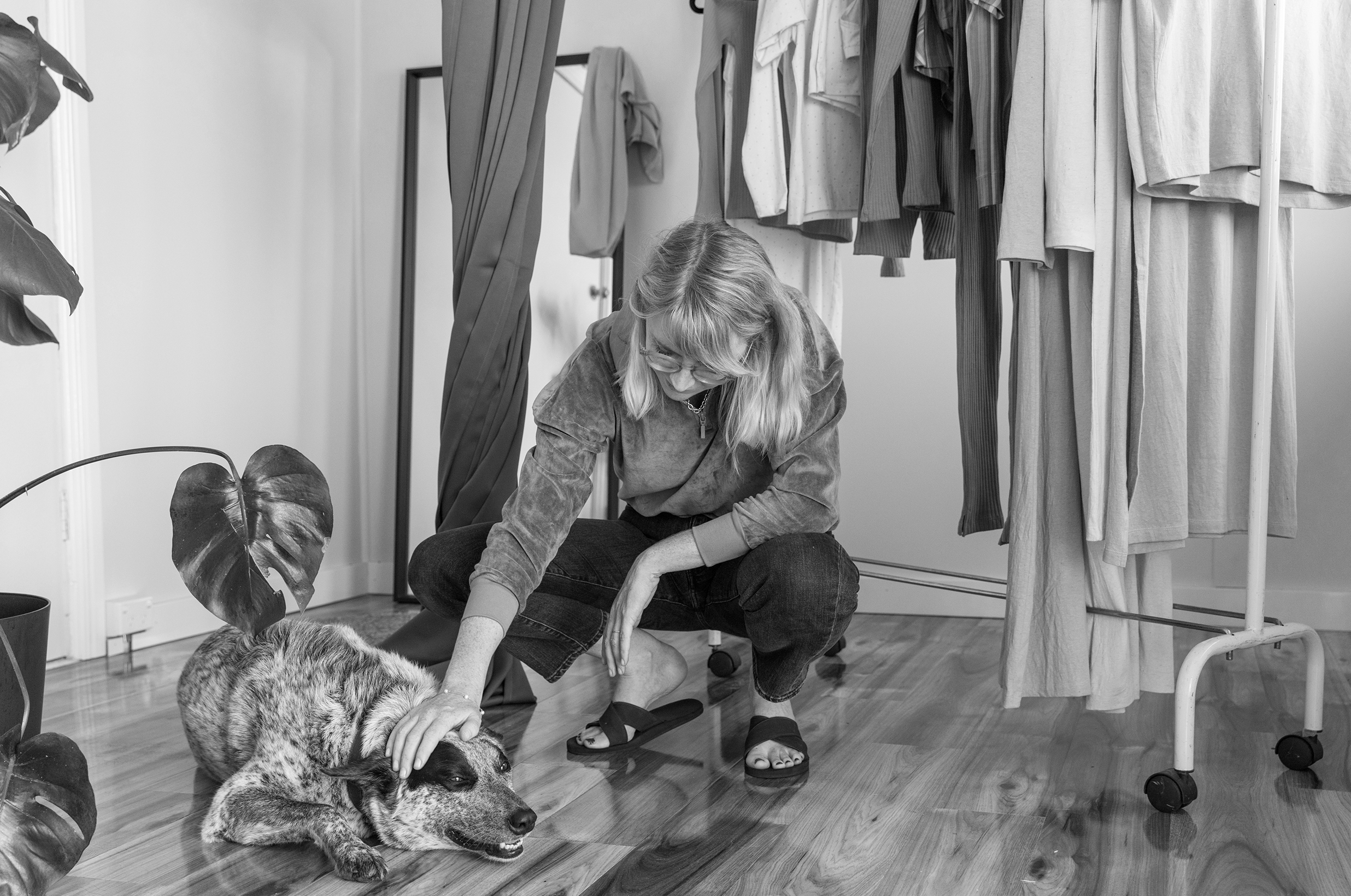
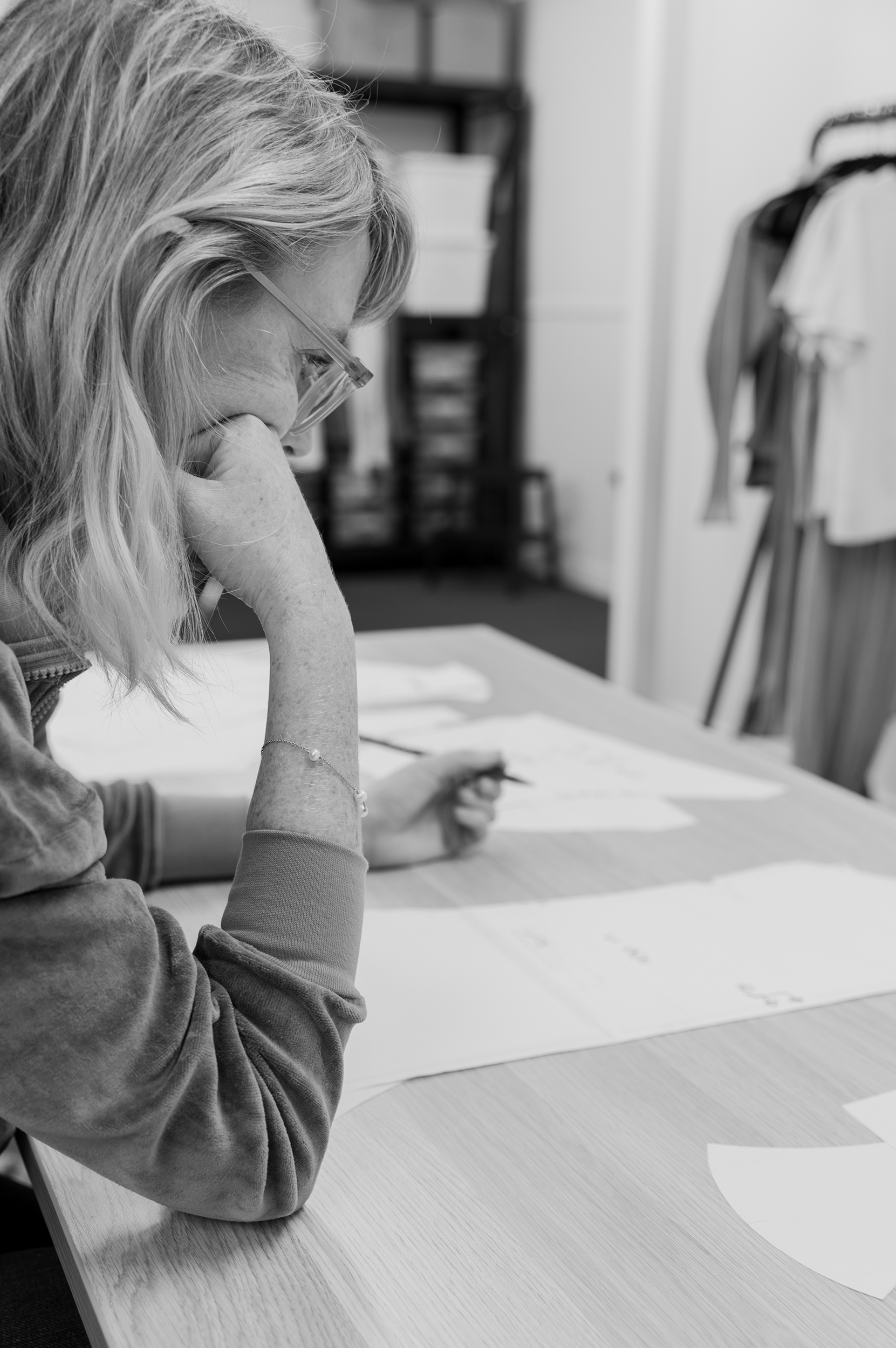
It was this purposive determination from which she produced her first collection. “It was just me, chained to the sewing machine for months,” she reflects. It was this environment—both remote and ruminative—that afforded Harvey the grounds to make a collection of underwear that responded to, and considered the body; turning herself over to execute her vision for NICO with singularity.


She had all the joys of starting anew: an intimate, zealous brand community, creative independence and all of the well situated by-products of a small-scale operation, not least, an inherently responsible manufacturing process, where what was produced was necessary, and workplace ethics need only be directed to one’s self. But with such a resonant new proposition for intimate-wear, upscaling NICO was always going to be the way forward. By drawing on her personal experiences Harvey had also, if unassumingly, heard the hollows of many others and translated this into something representative of what they needed too. “In the early days of the brand we did a lot of pop-up events and I was still amazed any time anyone came into the shop – people would say ‘oh yeah I really like your brand’ and I’d think ‘how do you even know we exist!’”
"NICO is definitely a visually-led brand. From the very outset of a collection or an idea, I’m already thinking about how we might shoot it, or how it will present.”
Lis Harvey
"NICO is definitely a visually-led brand. From the very outset of a collection or an idea, I’m already thinking about how we might shoot it, or how it will present.”
Lis Harvey
NICO’s growth gave way to a series of revelatory moments that would go on to define the brand, now synonymous with ethical upstanding and a staunch commitment to responsible production.
“It wasn’t until about our second collection when we started to outsource the manufacturing, and to look at this greater industry and supply chains, and how we were going to work, then starting to understand a lot of the inequality there and the issues that we were facing in the industry,” Harvey explains. “I just wanted to sleep at night, I wanted to feel okay about what I was doing. I could just feel that there was change coming and I didn’t want to turn away from it. When you are so involved in the supply chain choices you can’t help but see it going on in front of you, so I couldn’t and didn’t want to do it any other way.”
“I wanted to feel okay about what I was doing. I could just feel that there was change coming and I didn’t want to turn away from it.”
Lis Harvey
“I wanted to feel okay about what I was doing. I could just feel that there was change coming and I didn’t want to turn away from it.”
Lis Harvey
Harvey humanises the industrial and mythological fashion world with her empathy and tenderness towards people, citing anecdotes about her team with an excited and genuine fixation on their wellbeing. “Our production manager introduced us to this artisan team of natural dyers, who are just so cool and so clever,” she begins. “The guy who runs it, he worked for many years in a conventional dying house using chemical dyes, and on the side he was so passionate about natural dying. So for 16 years he was practicing and trialing and developing these natural dyes, and seeking out mentors and learning. Then he got to the stage where he could go out on his own and start his own natural dying business. He’s so dedicated to not using chemicals, to converting his space to solar power—it’s inherent in his business. I’ve got an opportunity to help those guys grow, which for me is definitely the most exciting part. Seeing them—a very very small artisan group so busy—it’s great. I love seeing their businesses grow.”
“Those first couple of years were really hard...finding the time that was needed to run the business, and also feeling like I was being a good mother.”
Lis Harvey
“Those first couple of years were really hard...finding the time that was needed to run the business, and also feeling like I was being a good mother.”
Lis Harvey
Meditating on the day-to-day realities of owning her own business, Harvey journeys reverently through the highs and troughs of building the brand. “I think time management is the hardest part of the entire thing. I’ve become a mother—she’s nearly three—and I think definitely, those first couple of years were really hard, just in terms of finding the time that was needed to run the business, and also feeling like I was being a good mother. You know, being on top of that side of my life as well. This isn’t really like a 9-5 job, it’s like a 24/7 job in some ways. Thankfully I enjoy it, but it took a little while to work out that balance and to find the time in my life.”
Harvey started her career as a creative and advertising photographer—which she cites as a sharp influence on the way that she approaches NICO—but is wired to a genuine inclination towards the mechanics of business. “I’m a big believer in the right systems and the right processes,” she explains. “I really enjoy the challenge of—well you know, it’s like Monopoly times one hundred—that process of growing something, making moves and seeing it pay off; learning from the steps that you take. I’m also very lucky to have a lot of insight into the power of images, how they speak and how they can convey a message about a brand,” Harvey explains. “That’s something that I got to see from the other side before I had to apply it to my own business. NICO is definitely a visually-led brand. From the very outset of a collection or an idea, I’m already thinking about how we might shoot it, or how it will present, and in that way it’s like a really seamless line between the idea, through to how it’s presented to an audience. It’s such a big part of every stage of the design process. For me it’s very visual. Everything comes from a visual place.”
This visual compass extends also to NICO’s place in the image economy, where social media affords the brand an essential line of communication and connection to their audience; the power and necessity of which Harvey approaches sagaciously. “I’m super aware of the responsibility of our platform. I’m super aware of not overstepping the mark in terms of how we dictate to people, or telling people how they should think, how they should act. But I do think we have a responsibility in terms of representation of our audience, to make sure that they feel welcomed in this space.”
In a world where definitions of self are increasingly progressive and all-embracing, the close link between underwear to the body is a sharp sensorial reminder of how we understand our identity. Harvey speaks about the heterogeneous experience of owning a body, vocalising with a gentle, measured candour. “What we do at NICO is very much a celebration of femininity—that’s what we’re about—but it’s so important that we distinguish that we’re not talking about gender, we’re talking about whatever role that takes. But that being said I think we can do better in this space. I think the industry needs to do better in this space.”
“Our responsibility,” Harvey resolves, “is to change that.”
Words: Magdalene Shapter
Photography: Katy Bedford