Emily Giles lived in a tiny town on the outer rim of Queensland. In her youth, she played sports and occupied her time in the town’s patchwork store, where she started working from the age of 12. There, she learned how to sew, and in between shifts, Giles also ventured into the town’s only newsagency, where she bought every glossy magazine issued. During her secondary school years, a teacher handed her a brochure for an internship at Queensland University of Technology, where she had to drive five hours into the city for the interview—where she landed the role. “Just apply for anything, even if you don’t think you’re necessarily in that role,” she tells me, of intuiting my way into the workforce.
Giles clearly took her own words to heart. Shortly after the internship, she moved to Brisbane to pursue a double degree in Bachelor of fine arts and fashion advertising for four years. When we speak, eleven years later, she’s recently left a post as the General Manager of Development and Production at Aje. As for what happened in between? Fabric and connecting with people was the constant throughline that saw her through a storied, decade-strong career working at some of Australia’s defining labels.
“Out of university, I started working at Wall Fabrics in Sydney, selling fabrics for two days a week,” she reminisces. “I sold fabric for two days a week. I was so eager to meet as many people as possible, I was calling Australian designers asking for advances, and meeting people on the warehouse floor selling fabric.” It was in this environment where she met the product manager of Ellery, and was tapped for a design assistant role by chance.
From there, things surged. She managed the Ellery studio for Paris Fashion Week, having her three square meals in the Sydney office and then connecting with Kym Ellery, the founder of the label, at midnight to have fabric approved. She hand sewed corsets for Kim Kardashian. She worked so hard she burnt out. The roles tumbled out, from Bassike to Assembly Label to Aje, where she rotated from front development to manufacturing, observing what retailers across the world were doing, and slowly feeding that back into the Australian industry.
All of this she foresaw—but the transition into leadership was one that took her longer to flesh out. “To go from product developer to manager, I did a lot of leadership training before I grew into managerial roles,” Giles says. “I want to be the best and learn from the best in the industry.”
"When we even think about investigating where our yarns are from, we are technologically behind. We should be using our Australian wool and Australian cotton, even though it's too expensive at the moment. We should be celebrating our agriculture and putting it into our own garments - and that might be key to breaking out of the cycle."
~ Emily Giles
In fact, what she learned on the ropes is still, crucially, what the leader still draws on today—and attributes to her success. Fighting fires is the first. (“You need to come up with different options! You have to bake a cake. You have a recipe list, but there’s always human error. And the business needs to keep on running.”) Playing competitive cricket in the Australian squad at 16 also taught Giles leadership skills and how to manoeuvre in and amongst a team. “It’s a very hard thing to get a team to work together, but if you can garner their trust, you can make miracles happen.”
When I try to parse what the Australian industry might be missing, Giles takes a beat to collect her thoughts, as if to narrow in on the dilemma in front of her, before she chooses what to say. “It’s hard, because the consumer of today doesn’t want to pay for what they buy, at the end of the day,” she begins. “We’ve got the TEMUs of the world, where you can dictate your spending for a crazy price. It makes it very hard to be competitive, and the brand has to take the margin loss to promote. For example, when we even think about investigating where our yarns are from, we are technologically behind. We should be using our Australian wool and Australian cotton, even though it’s too expensive at the moment. We should be celebrating our agriculture and putting it into our own garments—and that might be key to breaking out of the cycle.”
"You can see when things get very AI. That's not what I'm rallying behind. I'm all for hybridity in the workplace, becuase we need to keep adapting."
~ Emily Giles
The way out might be to stay true to the brand DNA. “Why is the customer buying? You need a percentage of newness to keep the customer wanting,” she notes. “Stay true to yourself and don’t outprice yourself in the market.” With Trumpian tariffs and the US dollar always fluctuating, the cost has to be better.
On the topic of AI, Giles is upbeat but realistic. “I don’t want to ever say there are designers anymore, but there is now an option where you can go into an auto-development cycle and a whole creation can be keyed in for you,” she notes. “You can now make things quicker than ever before—so it’s just a matter of people embracing it—with the right modus operandi.
Not to contribute to the slop epidemic that’s populating our feeds, but as a creativity starting point. Translating to Mandarin. Support efficient methods of working. Providing actual opportunities to the people behind the teams, whose time and skill sets can be freed up. “It should all be hybrid,” says Giles, who rattled off all the examples above. “You can see when things get very AI. That’s not what I’m rallying behind. I’m all for hybridity in the workplace, because we need to keep adapting.”
Professionally, Giles thrives when she can help build a growing business—she goes to China every two months to grow a supply base and sift through and organise categories. On one trip, Giles found a labour factory which was fully robotic—which slashed costs significantly.
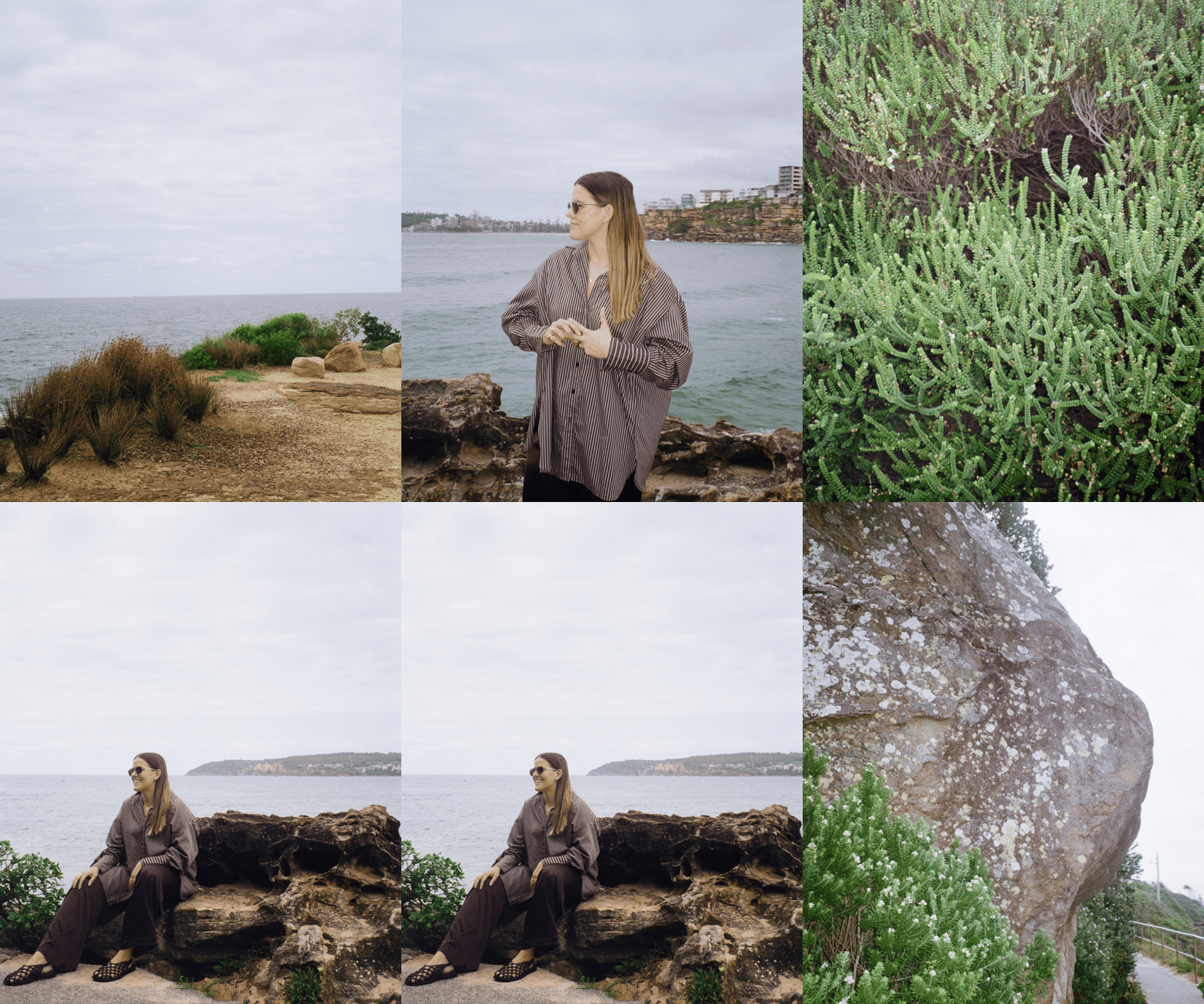
Privately, it’s less commute time. It’s living in the Northern Beaches, working to manage a small business located there, and being able to really reap the fruits of being by the water. Ten years ago, she made a conscious decision to go for a swim, and then hit the gym. Today, they’re still the two things that reset her everyday. Gym, then swim. Giles is in the market to buy an apartment and to renovate it as she sees fit. She’s thinking of looking at Freshwater, which is studded with rocklands and saltwater pools, wedged right in between Manly and Curl Curl. “In the past, every time I had spare time, I was just sleeping—and that is not the way I wanted to live,” she muses. “We can have a world where we create amazing garments and still have this life.”
Profile by Karen Leong
Photography by Maya Pratt